The term “Old Master” resonates with a sense of timeless artistry, conjuring images of breathtaking paintings, intricate prints, and masterful drawings.
But what exactly defines an Old Master? In the realm of art history, the term encompasses any skilled painter who worked in Europe before roughly 1800, along with original prints and drawings created by artists during the same period. Some of the Old Masters include Rembrandt, whose innovative use of light and shadow revolutionized portraiture and narrative painting.
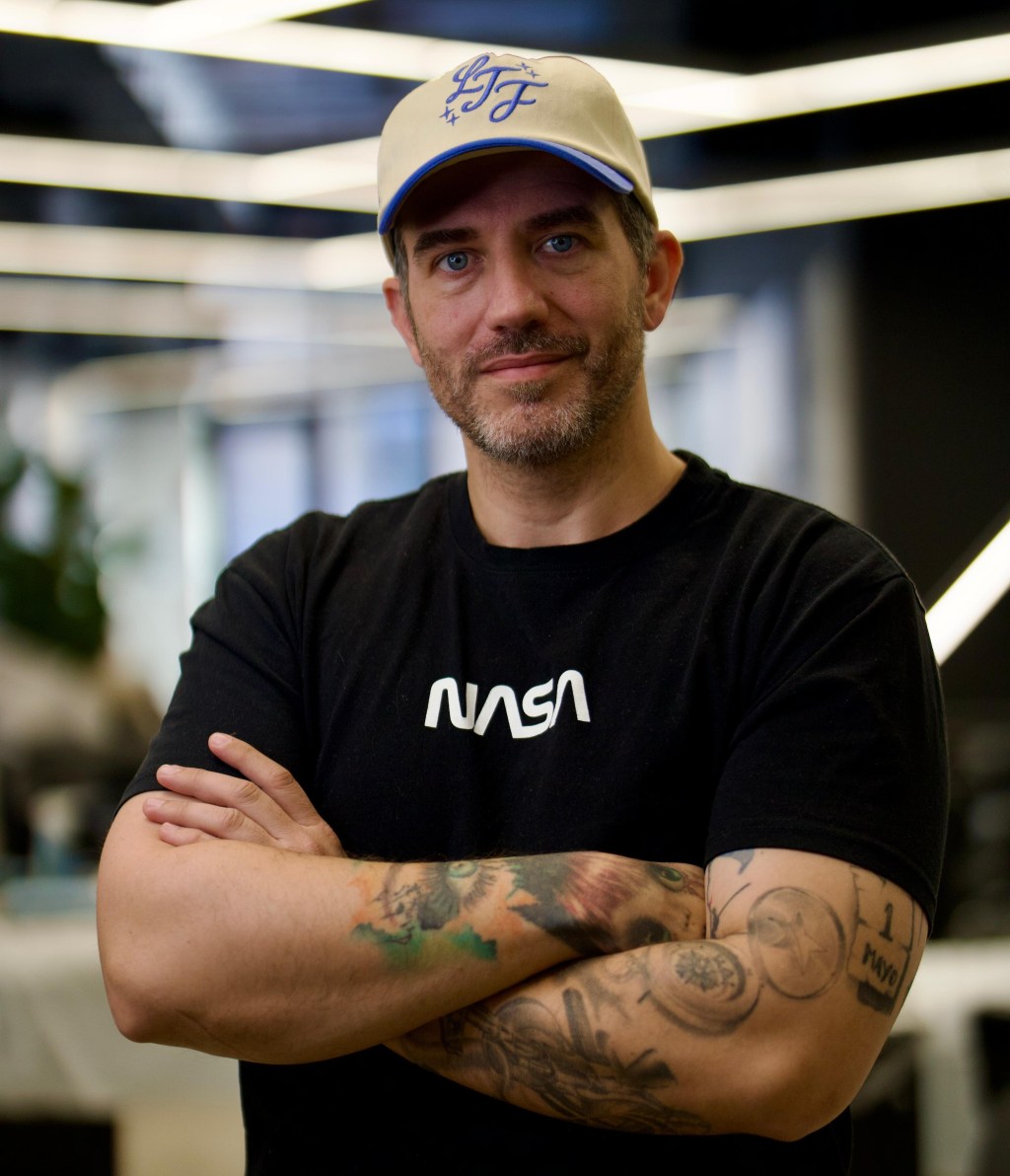
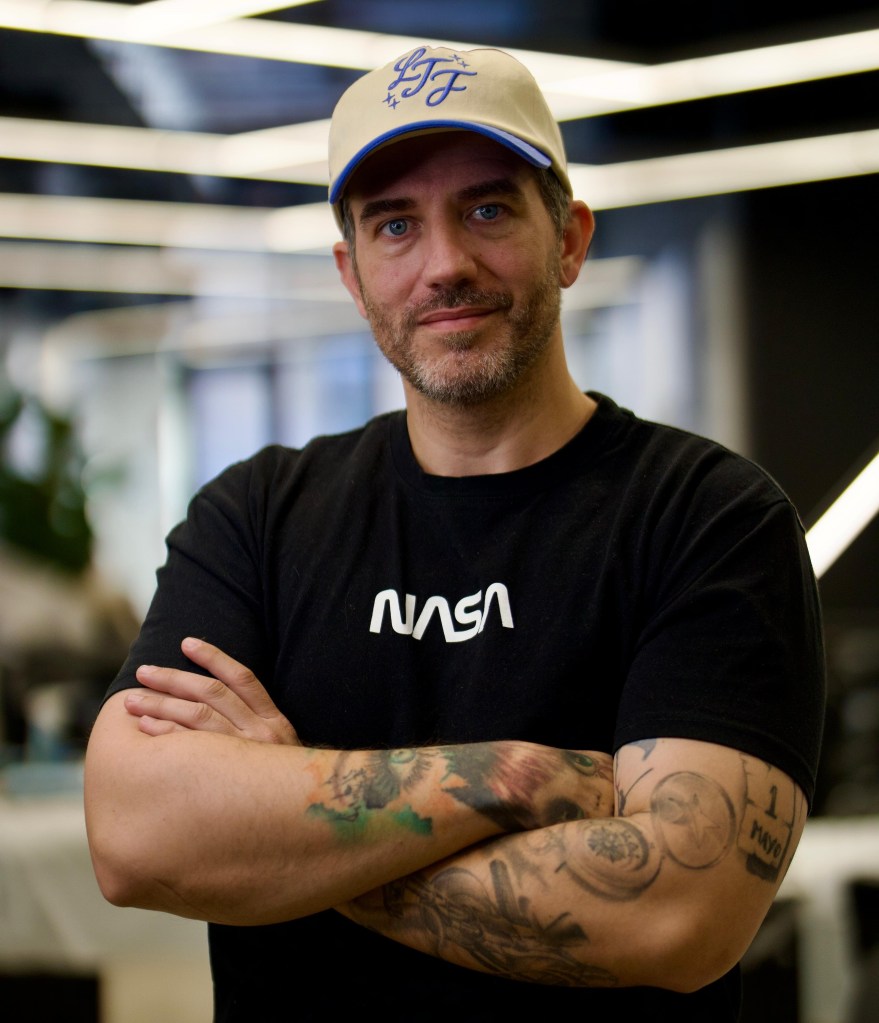
New York based Victor Mane is inspired by Old Masters paintings. Mane learned about Old Masters paintings from his father, who was a visual artist.
“Portraits were his true passion, yet he often switched to still lifes to keep his hand—and his keen eye—sharp,” said Mane, who is an award-winning tattoo artist and co-owner of Brooklyn tattoo studio, Minimal NYC.
His artistic roots are clearly planted in art history. Though Mane has always been an artist, he didn’t pursue tattooing until age 29. Now, Mane channels his understanding of art history into stunning black and grey realism tattoos. He is inspired by the dramatic chiaroscuro art by Old Masters like Caravaggio, Velázquez, Picasso, and Peter Paul Rubens.
He learned about these Old Masters through his father’s artwork. He watched his father paint to learn about art history, too. “While my father painted, he would explain how light carves volume, how a single highlight can turn a flat shape into something almost tangible,” said Mane. “He believed painting wasn’t just copying what the eye perceives on a blank surface; it was an artist’s personal commentary on reality, delivered through any drawing or painting technique.”
Mane adds: “What inspired me the most was that mindset—my father’s unwavering curiosity and the passion he poured into every stroke. Watching him translate emotion into brushwork taught me that art is equal parts observation and interpretation, a lesson that became the cementation of my own creative journey.”
Applying the principles of Old Masters artwork; realistic shadows, depth and anatomy, is key to Mane’s approach to tattoo art. “The European Old Masters have always been my most enduring classroom,” Mane says. “Caravaggio taught me the power of chiaroscuro—the drama of light against shadow—so I translate his stark contrasts into saturated blacks and crisp highlights on skin. Velázquez has shown me honesty in portraiture; his ability to reveal character beneath the surface pushes me to capture a client’s essence, not just their features.”
Meanwhile, the artwork of Rubens has also had an impact on Mane’s art. “Rubens taught me the importance of texture and movement: the way he painted hair or fabric guides is how I build layers of fine lines and soft washes to create a lifelike depth,” said Mane. “When I pick up a tattoo machine, I’m essentially borrowing their brushwork, adapting centuries-old techniques to modern needles so each piece carries the same storytelling weight that those masters achieved on canvas.”
Mane’s dedication to the Old Masters is particularly evident in his admiration for Peter Paul Rubens, who was a 17th century Belgian painter who created paintings of European rulers, as well as landscapes and still lifes. “Rubens is my touchstone for texture, movement, and composition—three elements at the core of my very own tattoo work,” said Mane. “His canvases feel alive: flesh looks tangible, hair seems to ripple, and every figure flows effortlessly across the frame. That dynamism is exactly what I try to capture on skin through layered line work and high-contrast shading.”
Mane’s favorite Rubens painting is Two Satyrs from 1617-1619, which depicts two Mythological Satyrs, known for being the companions of Dionysus, the god of wine, and these beings happen to possess pointed ears and horns. “I love this painting so much, I tattooed it on my own leg,” said Mane. “In those intertwined figures you see everything I admire in Rubens’ art: muscular tension, atmospheric depth, and a composition that guides the eye in a perfect spiral. Whenever I design a sleeve or portrait, I’m echoing that same energy—turning static imagery into something that feels as vital as a Rubens brushstroke.”
When seeking artistic inspiration, Mane finds it in the hallowed halls of art history. “My favorite museums in the United States are no doubt the MoMA and the Metropolitan Museum of Art in New York City,” he said. “On my very first visit to the Met, I was captivated by the full-scale reconstruction of the courtyard from the castle of Vélez Blanco—a piece of my homeland perfectly represented in what is now my adopted city. The sheer range of classical masterpieces under one roof makes the Met my top choice here.”
In his home country of Spain, Mane is inspired by the Prado Museum in Madrid, the Dalí Theatre-Museum in Figueres, and the Thyssen-Bornemisza National Museum in Madrid. “Each museum offers a distinct window into art history, from the Old Masters to Dalí’s surreal imagination, and collectively they shape much of my creative insight,” he said.
Mane meticulously uses various techniques to achieve his signature style. “I start every tattoo with deliberate line work, using varied line work to establish the first hints of volume,” he said. “Even in that opening phase you can already see where each highlight and shadow will eventually sit. Next, I lay down into a mid-tone wash—much like a glaze in an oil painting—to set the overall value structure. From there I intensify the darker areas, building a smooth, realistic gradient that gives the piece depth and atmosphere. Finally, I add white to accent key highlights and reflections; judicious use of white is essential for nuance and contrast, turning a solid tattoo into one rich with subtle details.”
A recurring element in Mane’s tattoos is the captivating realism of the eyes he creates. “For me, a portrait doesn’t just come alive until the viewer’s gaze rests upon it,” he explains. “I begin by precisely tracing the iris and pupil, although it’s important not to define the iris with a defined line, but rather with a shadow that acts as a boundary around its contour.’
He uses ultra-fine lines for the capillaries and very soft shading, keeping in mind the most important thing: the eye has a spherical shape and should be treated as such. “The white ink is applied last, sparingly, to enhance the highlights and give the gaze that unmistakable sparkle,” said Mane. “I spend a lot of time refining the eyes because if the gaze feels authentic, the tattoo will be a resounding success.”
Mane is more than just a tattoo artist, he is the co-founder and lead artist at Minimal NYC, a contemporary tattoo studio located in Brooklyn, New York. Established in 2021, Mane had started the tattoo studio with two friends, and it aims to redefine the traditional tattoo landscape by emphasizing art, community, and personal expressions. Minimal NYC is a space where art and community intersect, offering a unique and immersive experience for those seeking meaningful and personalized tattoos. Despite its relatively recent arrival on the scene, Minimal NYC has quickly positioned itself as one of the most influential and sought-after tattoo studios in New York City.
Looking toward, Mane’s influence continues to broaden. He will serve as a featured artist and judge at two upcoming Villain Arts Tattoo Festivals in Houston, Texas and St. Louis, Missouri as part of the largest US convention circuit. Villain Arts is the leading organizer of tattoo conventions in the United States, hosting over 30 events annually across various American cities. These conventions bring together top tattoo artists, vendors, and enthusiasts, offering a stage for live tattooing, art exhibitions, and community engagement. Additionally, Mane has been invited to judge at the Whiskey Throttle Fair in Greensburg, Pennsylvania, further concreting his role in shaping the future of tattoo art.
 Tattooed Mag